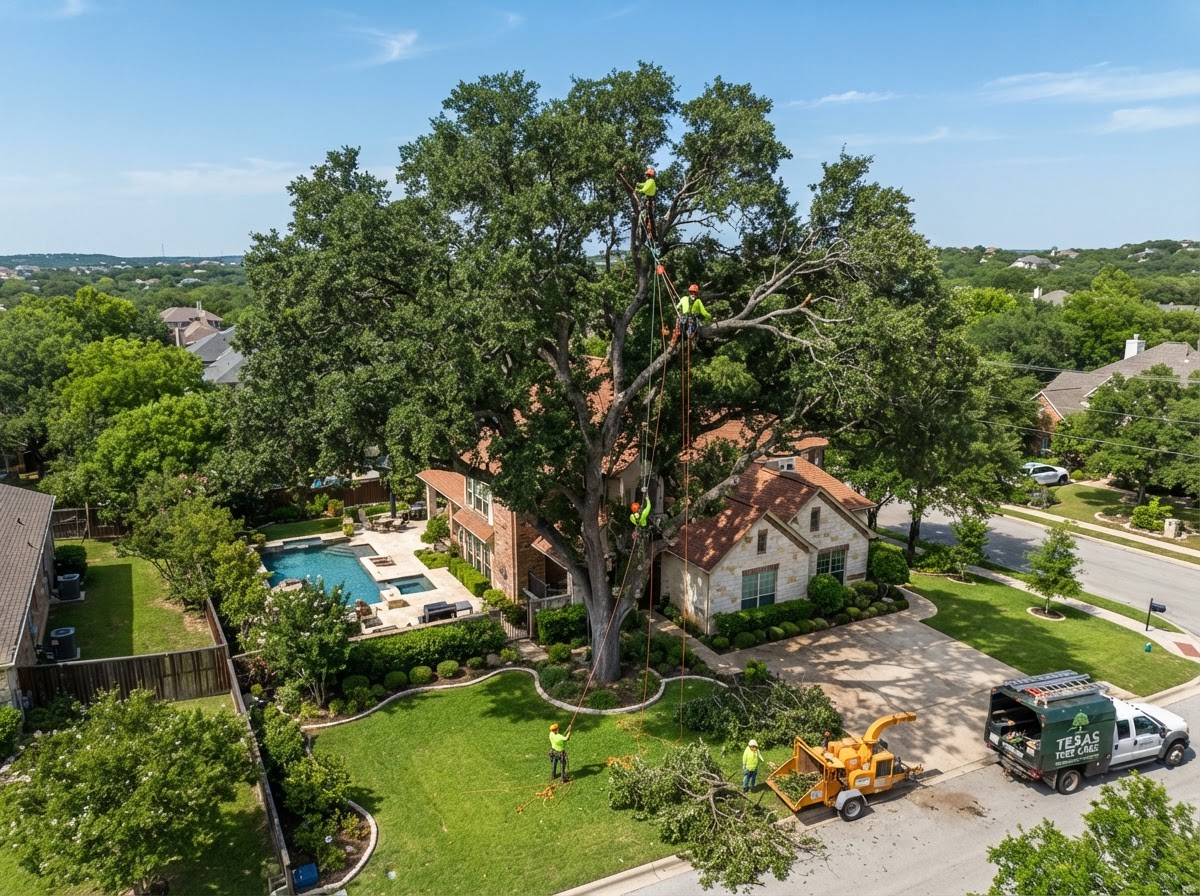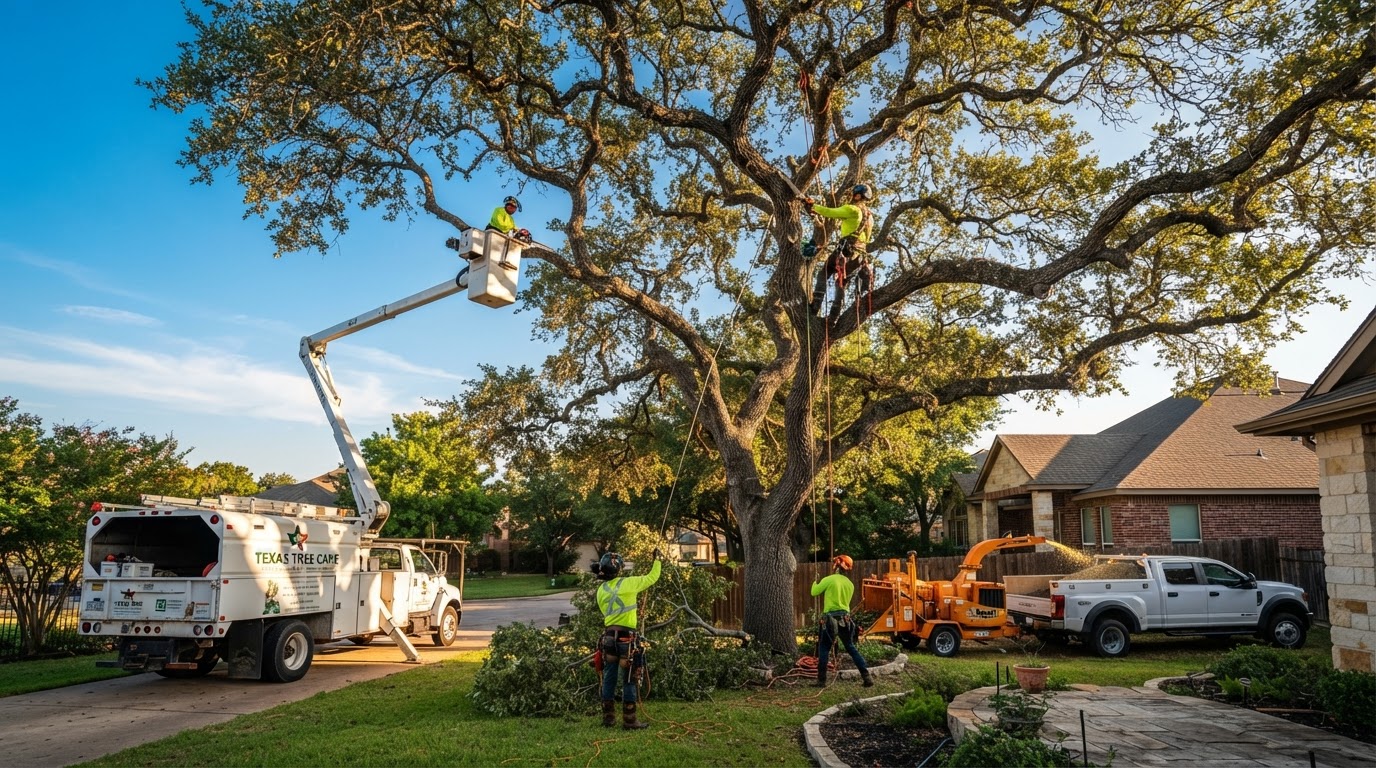
A tree in your yard can go from healthy to hazardous faster than you think. On the Gulf Coast, where storms, droughts, and saturated soils all stress trees in different ways, knowing the difference between a dormant tree, a stressed tree, and a dead one can save you thousands of dollars and a serious safety risk. This guide walks through the signs we look for as certified arborists on every Pearland property we assess.
The Scratch Test: Check the Cambium
The fastest field test for a dead tree is the scratch test. Take a pocket knife and scratch a small patch of bark off a twig. Under the outer bark is a thin layer called the cambium. On a living tree, the cambium is green and slightly moist. If it's brown, dry, and brittle all the way through, that branch is dead.
Test several branches at different heights and around the canopy. If every branch you scratch is brown and dry, the tree is likely dead. If some branches show green and others don't, the tree may be in decline — and an arborist assessment can tell you whether it's worth saving.
Six Signs Your Tree Is Dying
- Bark is falling off in large patches or the trunk has vertical cracks running up it.
- Fungal fruiting bodies (mushrooms or conks) are growing on the trunk or root flare — a sign of internal decay.
- Large sections of the canopy are bare while the rest of the tree leafs out normally.
- Leaves are undersized, discolored, or dropping prematurely out of season.
- Sap is oozing from wounds or the trunk has sunken, dead areas called cankers.
- The trunk is leaning more than it used to, or soil around the base is heaving upward.
Dead vs. Dormant: Don't Be Fooled by Winter
In Pearland, deciduous trees like cedar elm and pecan drop their leaves every winter. A bare tree in January isn't dead — it's dormant. The scratch test will still show green cambium on a dormant tree. The trees to worry about are evergreens (like live oak and southern magnolia) that hold their leaves year-round. If a live oak is bare in April, that's a red flag.
When a Dead Tree Becomes an Emergency
A dead tree doesn't just stand there. As the wood dries out and decays, it loses structural integrity. In a Gulf Coast storm — and we get plenty of them — a dead tree can snap at the trunk or uproot at the base with much less wind than a living tree would. If a dead or dying tree is within falling distance of your house, your car, power lines, or a neighbor's property, it should be removed before the next storm, not after.
This is also the time to call us: removing a dead tree is almost always less expensive than removing one that has already fallen on your roof. The rigging is more predictable, there's no insurance coordination, and you control the timing.
What to Do Next
If you've checked the signs and you're not sure, that's exactly what a tree health assessment is for. We'll come out, inspect the tree's structure, roots, and canopy, and give you an honest recommendation — save it, prune it, or remove it. There's no charge for the estimate, and we'll tell you straight whether the tree needs to come down or whether a pruning plan can bring it back.
Need help with a tree on your property?
Estimates are free, and we'll tell you honestly what your tree needs — pruning, removal, or nothing at all.