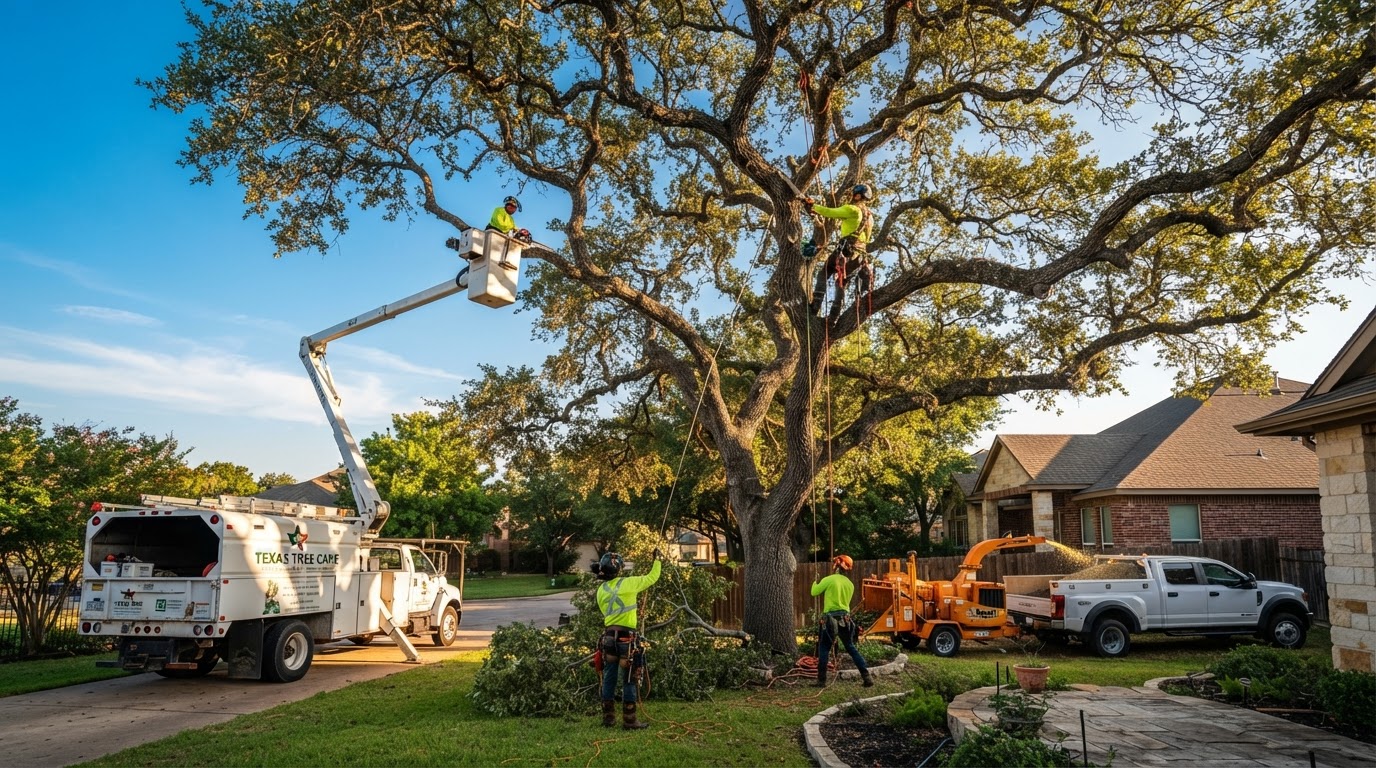
Pruning at the right time is the single most important thing you can do for a tree's long-term health. In the Houston climate — where we have a long growing season, intense summer heat, and specific disease pressures like oak wilt — the calendar matters more than most homeowners realize. Here's the seasonal breakdown we give every Pearland customer.
The General Rule: Prune in Dormancy
For most deciduous trees — pecans, cedar elms, red oaks, bald cypress — the best time to prune is during dormancy, roughly December through February. The tree has dropped its leaves, growth has paused, and the wounds heal cleanly before spring bud break. Pruning in dormancy also means the tree's energy reserves are in the roots, so removing branches doesn't steal resources the tree needs for a flush of new growth.
There's an exception to every rule, and in Houston the biggest exception is live oak. Live oaks are technically evergreen but they do have a dormant-ish period in late winter. However, there's a more important timing factor for oaks — and it's a matter of life and death for the tree.
Oak Wilt: Why You Never Prune Oaks in Spring
Oak wilt is a fungal disease that's devastating and widespread across Central and Southeast Texas. It spreads through root grafts between trees and, critically, through sap-feeding beetles that are attracted to fresh pruning wounds. The beetles are active and the fungus is producing spores from February through June — the exact window when many homeowners think about pruning.
The rule in our industry is simple: never make a pruning cut on an oak tree from February 1 through June 30. If you must remove a damaged limb during that window — say, after a storm — we paint the wound immediately with pruning sealer to keep beetles away. But routine pruning of oaks happens July through January, when the beetles are dormant and the disease pressure is off.
Crepe Myrtles: Prune Late, Never Top
Crepe myrtles are the most abused tree in Greater Houston. The practice of 'crepe murder' — lopping the tops off in early spring — is everywhere, and it's the wrong way. Crepe myrtles bloom on new wood, so pruning in late winter (February) does encourage summer blooms, but you should be thinning crossing branches and removing seed heads, not hacking the canopy flat. Topping a crepe myrtle creates weak, ugly regrowth that's prone to breakage.
What You Can Prune Anytime
Dead, diseased, and broken branches can be removed any time of year — there's no benefit to leaving a hazard on the tree. The seasonal rules apply to healthy, living wood. If a branch is dead or hanging after a storm, get it off the tree regardless of the month.
The Bottom Line for Pearland
Here's the seasonal cheat sheet we follow: December–February for most deciduous pruning, July–January for oaks (and never February–June), late February for crepe myrtle shaping, and anytime for deadwood and storm damage. If you're not sure what your tree needs or when, that's a free call — we'll tell you the right window for your specific species and situation.
Need help with a tree on your property?
Estimates are free, and we'll tell you honestly what your tree needs — pruning, removal, or nothing at all.