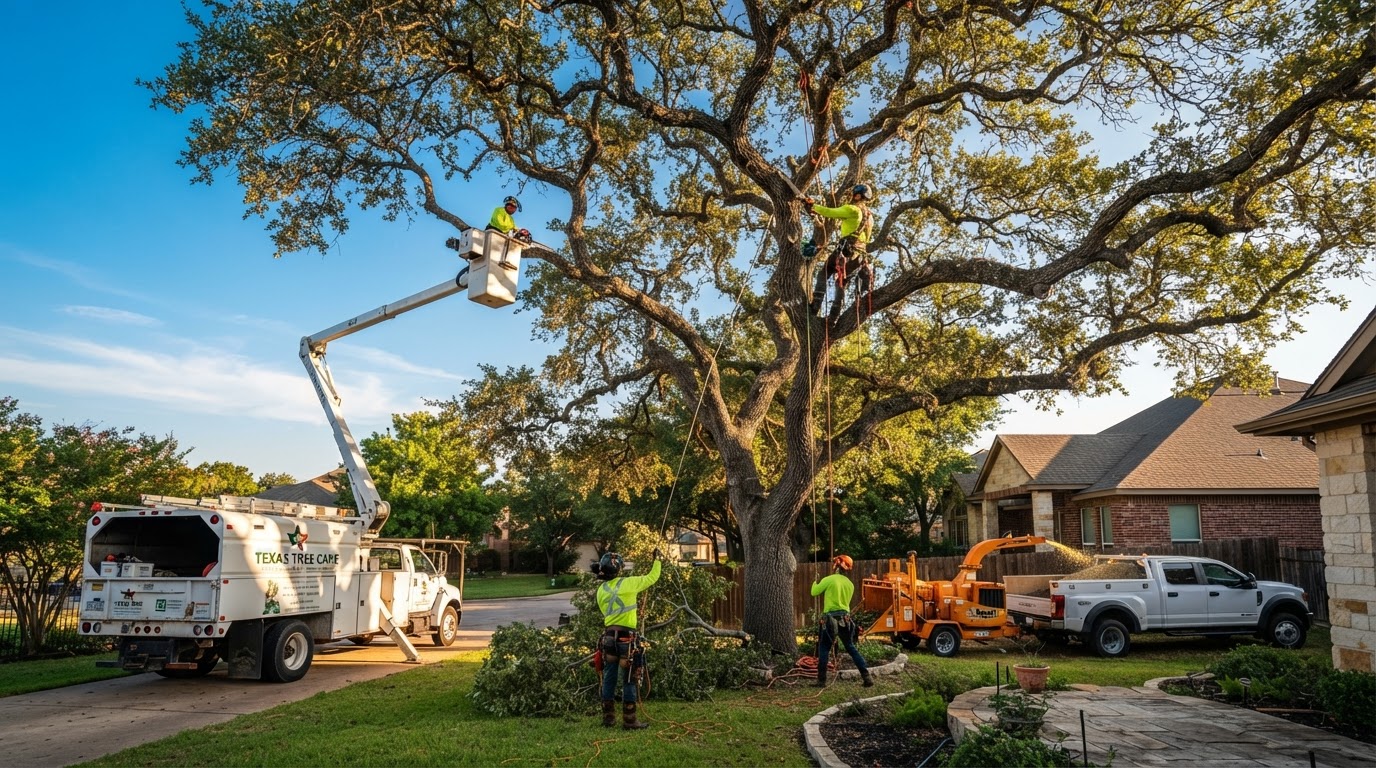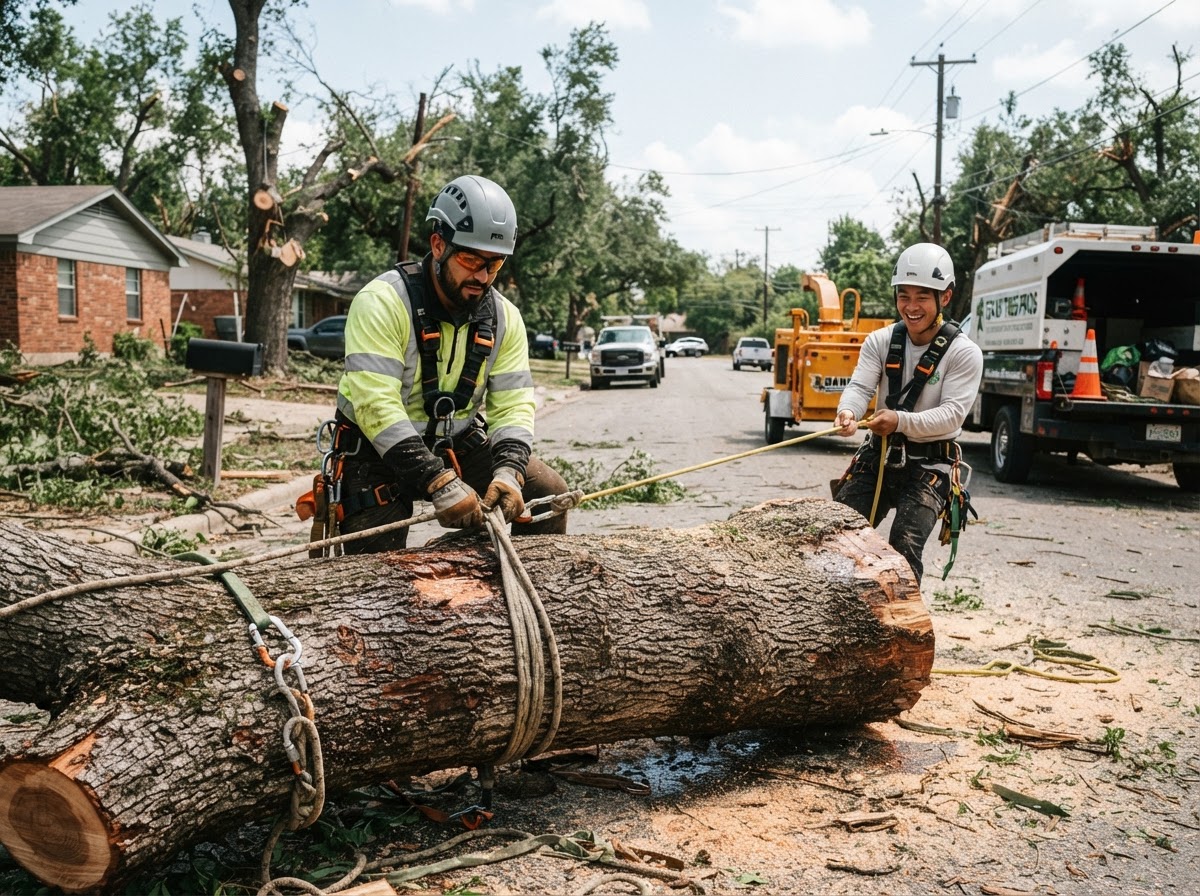
On the Gulf Coast, storm season is a fact of life — and so is storm damage to trees. Whether it's a hurricane, a squall line, or a sudden microburst, the first hour after damage matters. Here's the playbook we walk every customer through when they call us at 2 a.m. with a tree on their roof.
Step 1: Make Sure Everyone Is Safe
Before you do anything else, get people away from the tree and away from anything it's touching. If the tree is on your house, don't go into the rooms it's affecting — the structure may be compromised. If it's touching or near power lines, treat every wire as live and keep everyone well back. Call your utility company for downed lines. Your safety comes first, always.
Step 2: Document Everything
Before any cleanup begins, photograph the scene from every angle — the tree, what it's touching, the surrounding area, any damage to structures. Your insurance company will need this, and you can't go back once the tree is gone. Take wide shots and close-ups. If there's water coming in, photograph that too. These photos are your claim's foundation.
Step 3: Call Your Insurance Company
Most homeowner's policies cover tree removal when a tree hits a covered structure — your house, fence, or other insured building. Call your agent, open a claim, and ask what they need. They'll typically send an adjuster, but the tree usually needs to be removed before they can assess the structural damage. This is where we come in: we coordinate with adjusters, document the removal, and provide the paperwork your claim requires.
Step 4: Call for Emergency Tree Service
If a tree is on your house, on your car, or blocking access to your property, that's an emergency — and we keep a crew on call 24/7 for exactly this. Call (832) 994-5686 any time, day or night. We'll dispatch the nearest crew, assess the situation, and start the safe removal. For a tree on a structure, that often means rigging the tree apart in sections and lifting pieces off the roof with crane support so we don't add damage on the way out.
If the tree is in the yard and not hitting anything, it may not be an emergency — but it's still a good idea to get it removed before the next storm adds to the problem. We'll give you an honest assessment of urgency and a clear price either way.
Step 5: Tarp and Protect
Once the tree is off the structure, there may be exposed damage — a hole in the roof, a broken fascia, a cracked window. We'll tarp the exposed area as part of the job so water doesn't get in before your roofer can make permanent repairs. That tarping is often what your insurance company expects as 'mitigation' — the step that keeps the damage from getting worse.
What About Trees That Didn't Fall?
After a storm, walk your property and look at the trees that are still standing. A tree that survived the storm may still have a cracked trunk, a hanging limb (what we call a 'widow maker'), or a partially uprooted root plate that will fail in the next wind. These are hazards that need attention before the next storm — and a free assessment can tell you which ones are safe to keep and which need to come down.
We're Here 24/7
Storm damage doesn't keep business hours, and neither do we. If a tree hits your house or blocks your driveway tonight, call (832) 994-5686 — we answer around the clock, we dispatch fast, and we handle the insurance documentation so you can focus on getting your home put back together.
Need help with a tree on your property?
Estimates are free, and we'll tell you honestly what your tree needs — pruning, removal, or nothing at all.